
Our Fresno Rug Cleaning Process
A clear, material-aware approach from the first conversation through inspection, soil removal, cleaning, drying and final review.
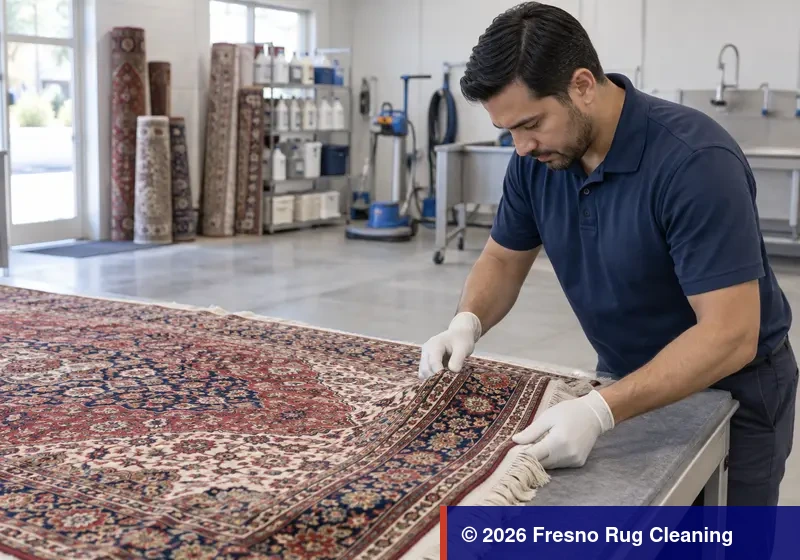
The Method Starts With the Rug
The homepage summarizes our process in five stages. This page shows the decisions inside those stages and why inspection comes before cleaning.
- Fiber, pile, backing and construction
- Dye behavior, color movement and prior treatments
- Fringe, edges, repairs and pre-existing wear
- Dry soil, spots, pet concerns and odor sources
- Customer priorities, timing and service location
The Complete Seven-Step Process
Not every rug needs the same treatment. These stages provide the framework, while the exact products, moisture level and equipment depend on the inspection.
Share the Details
Tell us the approximate size, material if known, current condition and main concern. Photos can help identify questions before scheduling, but they do not replace an in-person inspection.
Pre-Inspection, Fiber & Dye Review
We review construction, foundation, pile, color behavior, fringe, edges, odors, stains and visible damage. The planned scope and realistic limitations are discussed before work begins.
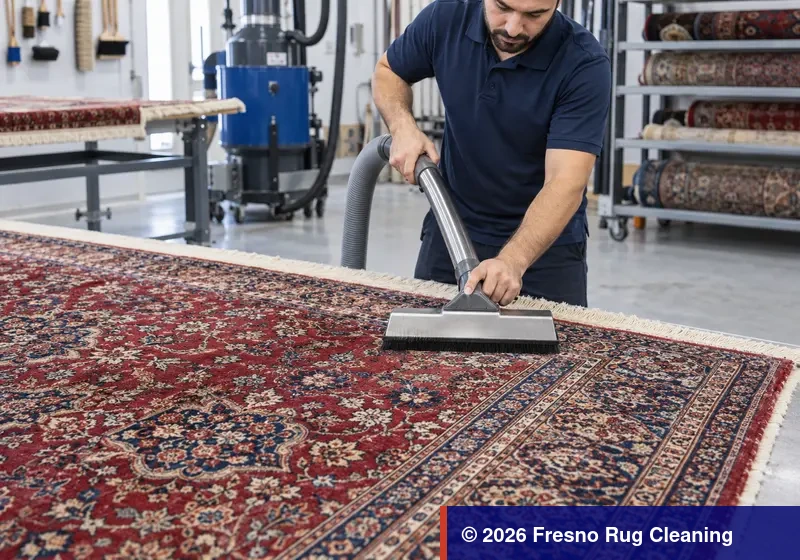
Dry Soil Removal
Loose particulate soil is removed before moisture is introduced when the rug and selected method call for it. This helps prevent dry soil from becoming embedded mud during cleaning.
Targeted Spot & Odor Preparation
Problem areas are identified and prepared according to the fiber, dye behavior and contaminant. Pet urine, food, drink, oils and unknown stains may require different treatment decisions.
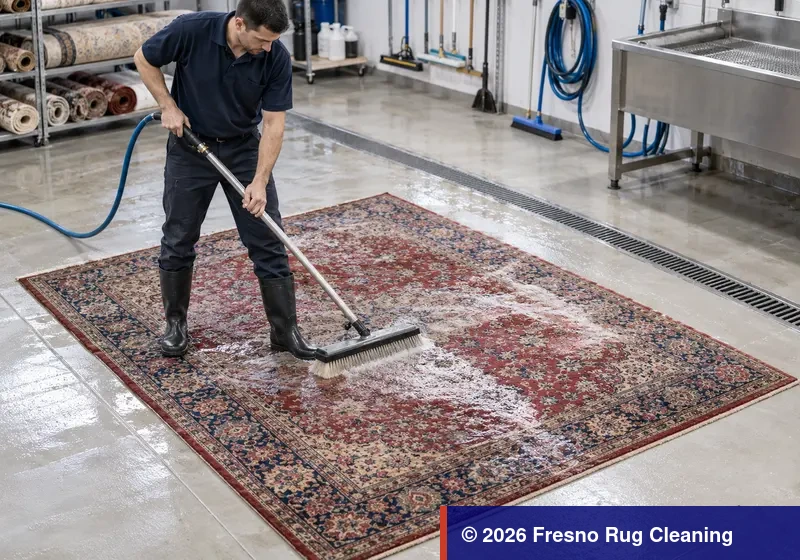
Controlled Cleaning & Rinsing
A suitable method is selected to loosen and remove bonded soil. When rinsing is appropriate, residues and suspended soil are removed without assuming every rug can tolerate the same level of moisture or agitation.
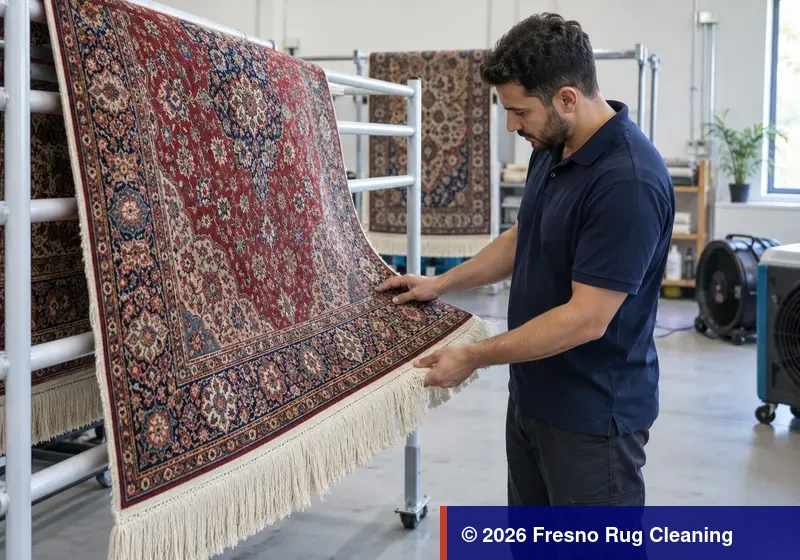
Moisture Removal & Controlled Drying
Excess moisture is removed and drying conditions are managed with attention to dye movement, texture, browning, odor and shape. Drying time varies with construction, weather, treatment and moisture load.
Detailing, Final Review & Return
Pile direction, fringe, edges, appearance and the original concern are reviewed. Any remaining limitation is explained, followed by practical placement and maintenance guidance.
Why the Method Can Change
Fiber type matters, but construction, dye stability, backing, age, wear and prior cleaning can matter just as much.
Wool, Persian & Oriental Rugs
Absorbency, natural fibers, hand-knotted construction, dyes, fringe and foundation condition require careful method selection and controlled drying.
Silk & Fine Fibers
Sheen, pile distortion, water sensitivity and color movement can limit aggressive spot treatment or high-moisture methods.
Synthetic Rugs
Nylon, polyester, polypropylene and blends can respond differently to heat, solvents, oils, stains and backing materials.
Handmade, Antique & Previously Repaired Rugs
Age, weakened foundations, old repairs, latex deterioration, brittle fringe and prior chemical exposure can change what is safe and what improvement is realistic.
Stains, Odors & Honest Expectations
Professional treatment can improve many concerns, but no responsible process should promise that every permanent color change, old stain or deep contamination will disappear.
What can affect the result
- How long the contaminant has remained in the rug
- Previous household products or professional treatments
- Damage to dyes, fibers, backing or foundation
- Pet urine that has reached multiple construction layers
- Wear, fading or discoloration that is not removable soil
Before the Rug Is Returned
The final stage goes beyond whether the rug simply looks clean. We compare its condition with the original inspection and review the details that can be missed in a rushed process.
Appearance & Finish
We review the surface, pile direction, edges and fringe for a neat, consistent finish.
Condition & Concerns
We check dryness, odor and the original concern documented during the initial review.
Clear Handover
We explain known limitations and share practical care guidance before the rug is returned.
Built Around Fresno Homes
Local scheduling and treatment conversations often involve tracked-in soil, pets, busy family areas, rental turnovers and rugs used across tile, wood or carpeted rooms.
Fresno & Clovis
Service details are confirmed by address, ZIP code and the needs of the rug.
Homes & Rentals
Timing and access are discussed for occupied homes, moves and property turnovers.
Pets & High Traffic
Odor, hair, tracked-in soil and repeated use are considered during inspection.
Clear Scope First
Size, condition, treatment needs and service logistics influence the estimate.
Process Questions
Clear answers before scheduling help customers understand timing, method choices and realistic results.
How long does the rug cleaning process take?
Timing depends on the rug’s size, construction, condition, treatment needs and drying requirements. We discuss the likely sequence after inspection rather than giving one timeline for every rug.
Do you clean every rug the same way?
No. Fiber, dye behavior, backing, construction, fringe, age, previous treatments and current damage can all change the recommended approach.
Is dry soil removal really necessary?
It is an important stage when appropriate because loose particulate soil is generally easier to remove before moisture is added.
Can every stain be removed?
No. Some marks are permanent dye changes, fiber damage, fading or residues from earlier treatments. We focus on safe improvement and explain visible limitations.
Can pet urine odor be treated?
Many pet-related concerns can be improved, but the result depends on how deeply contamination has reached, how long it has remained and whether fibers, dyes or backing have changed.
How long will the rug take to dry?
Drying time varies with fiber, construction, moisture level, airflow, treatment and local conditions. The rug should remain undisturbed until it is appropriately dry.
Will the rug be cleaned in my home?
That depends on the rug and the required method. The inspection determines whether an on-site approach is suitable or whether different handling arrangements should be discussed.
How is rug cleaning cost estimated?
Size, material, construction, condition, stains, odors, repairs, access and service logistics can affect cost. Clear photos and dimensions help start the conversation, followed by inspection when needed.
Tell Us What Your Rug Needs
Call to discuss its size, condition and the concern you want addressed.
