FRESNO RUG CARE
Wool Rug Cleaning in Fresno
Wool needs material-aware inspection, suitable products, careful rinsing and controlled drying. Tell us about the rug before choosing a method.
Why wool is treated differently
Wool is resilient, but it is not ordinary wall-to-wall synthetic carpet. Its absorbency, surface scales, dyes and construction can make it sensitive to high alkalinity, aggressive agitation, prolonged moisture and uncontrolled heat.
A wool label alone does not identify the whole rug. The foundation may be cotton, the fringe may be part of that foundation, and the backing may indicate hand-knotted, tufted or machine-made construction. Those details influence how wool rug cleaning in Fresno should be planned.
Existing dye migration, browning, shrinkage, weak fringe, moth damage, latex deterioration or previous detergent residue should be documented before work.
Problems wool rugs commonly show
Hidden dry soil
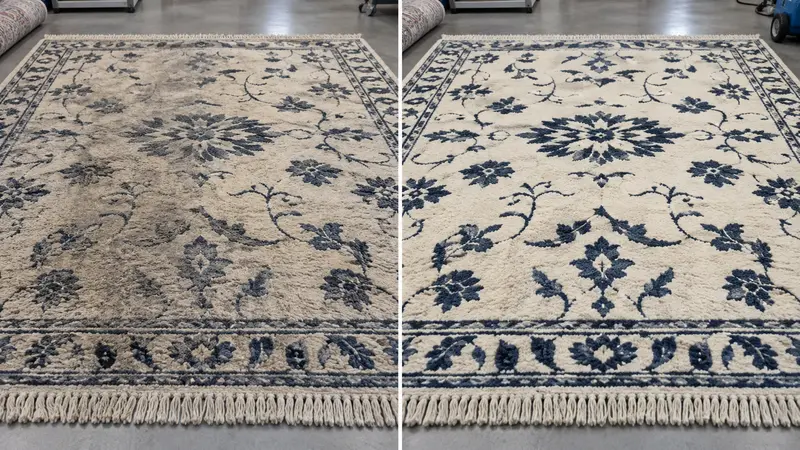
Dense wool pile can look acceptable while holding fine grit below the surface. Appropriate dry-soil removal helps reduce what would otherwise become muddy residue during wet cleaning.
Spills and color change
Food, drinks, pet accidents and household cleaners can alter dyes or fiber texture. Blotting is safer than rubbing, but older spots still need realistic expectations.
Flattened or uneven pile
Traffic, furniture and soil can affect pile direction and appearance. Grooming may improve presentation, but cleaning cannot reverse permanent wear, crushing or sun fading.
Odor and slow drying
Odor may involve the foundation or backing, not only the wool face yarn. Dense construction can retain moisture, so airflow and controlled drying are part of the plan.
A wool-specific process
Construction and dye review
We look at pile, foundation, fringe, backing, repairs, wear and signs of color movement. The goal is to identify risk before products or moisture are applied.
Dry particulate removal
Loose soil is addressed with a method suitable for the rug’s stability. Fragile areas and weak fringe require a gentler approach.
Cleaning and rinsing
Product choice, dwell time, agitation and rinsing must suit wool and the rug’s dyes. More chemical or scrubbing is not automatically better.
Controlled dry and final grooming
Drying aims to limit prolonged moisture and distortion. The finished rug is reviewed for texture, color behavior, edges, fringe and the original concern.
What wool cleaning can and cannot do
Professional care can remove a meaningful amount of soil and may improve many spots and odors. It cannot restore fiber lost to wear, replace faded dye, rebuild a weakened foundation or guarantee complete removal of every contaminant.
If a rug has curled edges, brittle fringe, old patches, moth activity or severe pet contamination, those conditions should be discussed separately. Cleaning, repair and odor treatment are different scopes.
For hand-knotted construction and fringe considerations, visit Persian and Oriental rug cleaning.
Wool rug questions
Can I use a rental carpet machine on wool?
That can be risky. Product alkalinity, overwetting, heat, residue and slow drying may affect wool, dyes and backing. Identify the rug and follow care guidance specific to it.
Will cleaning make faded colors bright again?
Cleaning may reveal color hidden by soil, but it does not replace dye lost to sunlight, wear or chemical damage.
Does wool always shrink?
Not always, but construction, moisture, heat and drying conditions influence dimensional change. Inspection and method control reduce avoidable risk.
How often should a wool rug be cleaned?
There is no universal schedule. Traffic, pets, outdoor soil, vacuuming, spills and construction are more useful than a fixed calendar.
What should I do after a spill?
Blot with a clean absorbent cloth, avoid rubbing or soaking, and keep household chemicals off the area until the rug can be assessed.
Related guidance
Area rug cleaning · Fringe and edge repair · Rug cleaning cost factors
Talk through the rug before scheduling
Call with the rug’s size, label or fiber information, age if known, current condition and Fresno ZIP. We’ll discuss whether an inspection is the right next step.
Fresno contact address: 2695 N Sunnyside Ave, Fresno, CA 93727. Call before visiting or bringing a rug.
